Building a Fitness App from Scratch Guide
Going from traditional gym environments to virtual health is no longer a new trend, but rather a revolution taking place when it comes to the concept of health itself. The era of wearable devices and smartphones acting as our health centers has arrived, and with it comes the need for advanced guidance tools and resources.
Understanding the development process of a fitness app means navigating a complex process of data synchronization, high-performance UI, and intense user competition.
Defining The Core Concept
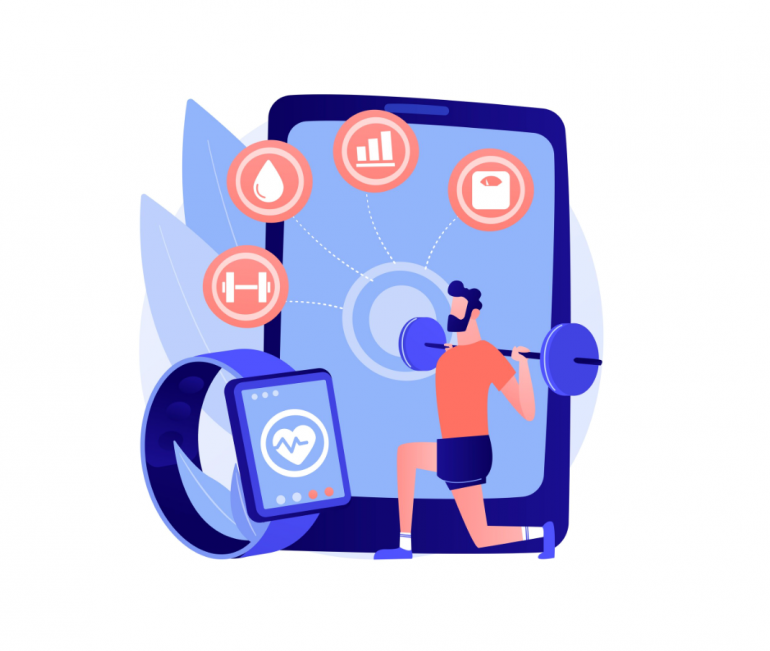
The first step in answering the question of how to develop a fitness app is that of focusing. If the fitness application attempts to cover all the grounds, chances are it will not succeed at any of them. The key to success lies in establishing dominance within a particular niche before venturing further. Popular niches include:
- Activity tracker: Using GPS and accelerometers to track runs, bike rides, or swims.
- Nutrition and diet: Emphasizing calorie counting, macronutrient monitoring, and meal planning.
- Workout and exercise: Offering pre-designed workouts that include video tutorials.
- Yoga and meditation: Concentrating on mental well-being and yoga sessions.
Once the niche market has been identified, the next step is to concentrate on the “hook,” or what value proposition can keep the application from turning into yet another app icon left unused by users. This is when it becomes crucial to conduct research related to the targeted audience in order to make sure that features address user problems.
The Essential Tech Stack And Features
The construction of an effective fitness application is no small feat for any engineering team. The backend must be able to process millions of data points, while the frontend must stay nimble during peak times.
Selecting a specialized fitness app development company can be the difference between a glitchy MVP and a scalable product.
Key technical considerations include:
- Wearable device compatibility: Smooth integration with Apple HealthKit, Google Fit, and other smartwatches.
- Gamification: Incorporating leaderboards, challenges, and badges to encourage user retention.
- Real-time performance analysis: Offering instant analysis of user performance metrics within each training session.
- Artificial intelligence-based personalization: Leveraging machine learning algorithms to customize workouts according to user feedback and HRV.
The tech stack usually involves cross-platform frameworks like Flutter or React Native for faster deployment, or native Swift and Kotlin for high-performance applications that require deep hardware integration.
Design: Friction Is The Enemy
For fitness purposes, any additional click is an excuse for the user to stop using the application. The UI should cater to the sweaty-hand usability with large buttons, high contrast for use outdoors, and clear navigation. The UX should provide a smooth and simple experience that enables the user to begin exercising or enter their food intake within seconds.
An appealing and motivational design accompanied by interactive features such as progress sliders would greatly increase the pleasure of using this application. In addition, good visual content like 3D models of exercises or HD videos would be very effective in making the user interested and preventing him from making any mistakes during the exercises.
Rigorous Testing And Quality Assurance
Since fitness applications have hardware integrations and deal with private biometric data, testing plays a vital role in their development. Functional testing helps in making sure that the GPS function does not fail during the run, whereas security testing guarantees the safety of the user’s sensitive health information.
In this case, usability testing becomes especially essential. The testers should create realistic conditions for testing, like testing how the application works while jogging or when there is poor connectivity. In case the app closes down when the user gets a phone call in the middle of a guided workout, chances are slim that a user will come back to use the app. When it comes to performance testing, it should be established whether the app consumes too much battery power, which is one of the most common reasons for uninstallation.
Launch, Growth, And Continuous Iteration
Being uploaded to the App Store or Google Play marks only the start of the product life cycle. The best way for an application to be successful is by treating its first launch as a test that allows one to learn about it. It is possible to find out what users ignore and what they consider necessary.
The creation of a fitness application from scratch is a long process rather than a sprint. The process entails constant rounds of collecting data, polishing the logic, and making upgrades which will catch up to the advancements made in wearable technology. In an era where the demands of the users are increasing every day, and fresh discoveries are coming every day in the field of health studies, quick iteration and a bug-free system are the keys to success.
Copyright © . All Rights Reserved